
Most people never think about how long does exterior paint last until they spot a strip of peeling siding or a chalky patch near the gutters. That is usually the moment the question how often should you paint your house exterior moves from “someday” to “this year.” The honest answer is that it depends on your siding, your paint, and how hard the weather hits your home. Some homes hold a clean finish for close to a decade. Others start to fade and crack in three or four years. The right timing has less to do with the calendar and more to do with what your walls are telling you. We handle exterior house painting for homeowners across Canton and the rest of southeast Michigan, and this is one of the first questions we hear at the curb.
How Long Does Exterior Paint Last?
Paint is not just color. It is the shell that keeps water, sun, and insects out of your siding. How long that shell holds up comes down to four things: the material under it, the quality of the paint, how well the surface was prepped, and the weather it faces. A wood-sided home in full sun ages faster than a brick home shaded by tall trees. Cheap paint rolled over a dirty wall can fail in a year or two. Solid paint over a clean, primed surface is what buys you the long end of every range.
Sunlight matters more than most people expect. UV light slowly breaks down color and the binder that holds paint together, which is why south-facing and west-facing walls usually fade first. Moisture is the other heavy hitter. Wherever paint cracks or lifts, water slips in behind it, and a small cosmetic issue can grow into wood repair. That is why two houses on the same street can end up on very different repaint schedules.
How Often Should You Paint Your House Exterior?
Every siding material wears at its own pace, so the timing shifts from house to house. Here is a simple starting point based on what most painters and paint makers report. Treat these as ranges, not hard rules.
| Exterior surface | Repaint every |
|---|---|
| Wood siding | 3 to 7 years |
| Aluminum siding | 5 years (up to 10 with quality paint) |
| Stucco | 5 to 6 years |
| Fiber cement siding | 10 to 15 years |
| Vinyl siding | About 10 years |
| Painted brick | 15 to 20 years |
| Trim, doors, and shutters | 3 to 5 years |
These ranges line up with what consumer resources like Angi’s breakdown of exterior paint life report, and they match what we see on homes around Canton. Our own rule of thumb stays simple: plan on a fresh coat every 5 to 7 years for most siding, and check wood and sun-facing walls sooner.
Signs It Is Time to Repaint
Sometimes your home speaks up before the calendar does. You do not have to wait for a set number of years if the paint already looks worn. A few things worth watching for:
Peeling paint and bare wood are worth acting on quickly. Once paint stops sealing the surface, a straightforward repaint can turn into a carpentry bill.
Why Michigan Weather Is Hard on Exterior Paint
Canton homes face a full spread of seasons, and that spread is tough on a finish. Winter brings freeze-thaw cycles that make siding expand and contract, which stresses paint and caulk until they crack. Summer sun bakes the south and west walls and pulls color out of the paint. Spring and fall humidity feeds mildew in shaded spots. All of that adds up to a shorter repaint window than a home in a mild, dry climate would need.
It also means prep is not something to skip here. Washing the surface, scraping failing paint, and priming bare wood are the quiet steps that keep a Michigan finish from lifting early. The best time to paint an exterior in this region runs from early summer through early fall, when temperatures are stable and there is less rain to interrupt drying and curing.
What Makes an Exterior Paint Job Last Longer
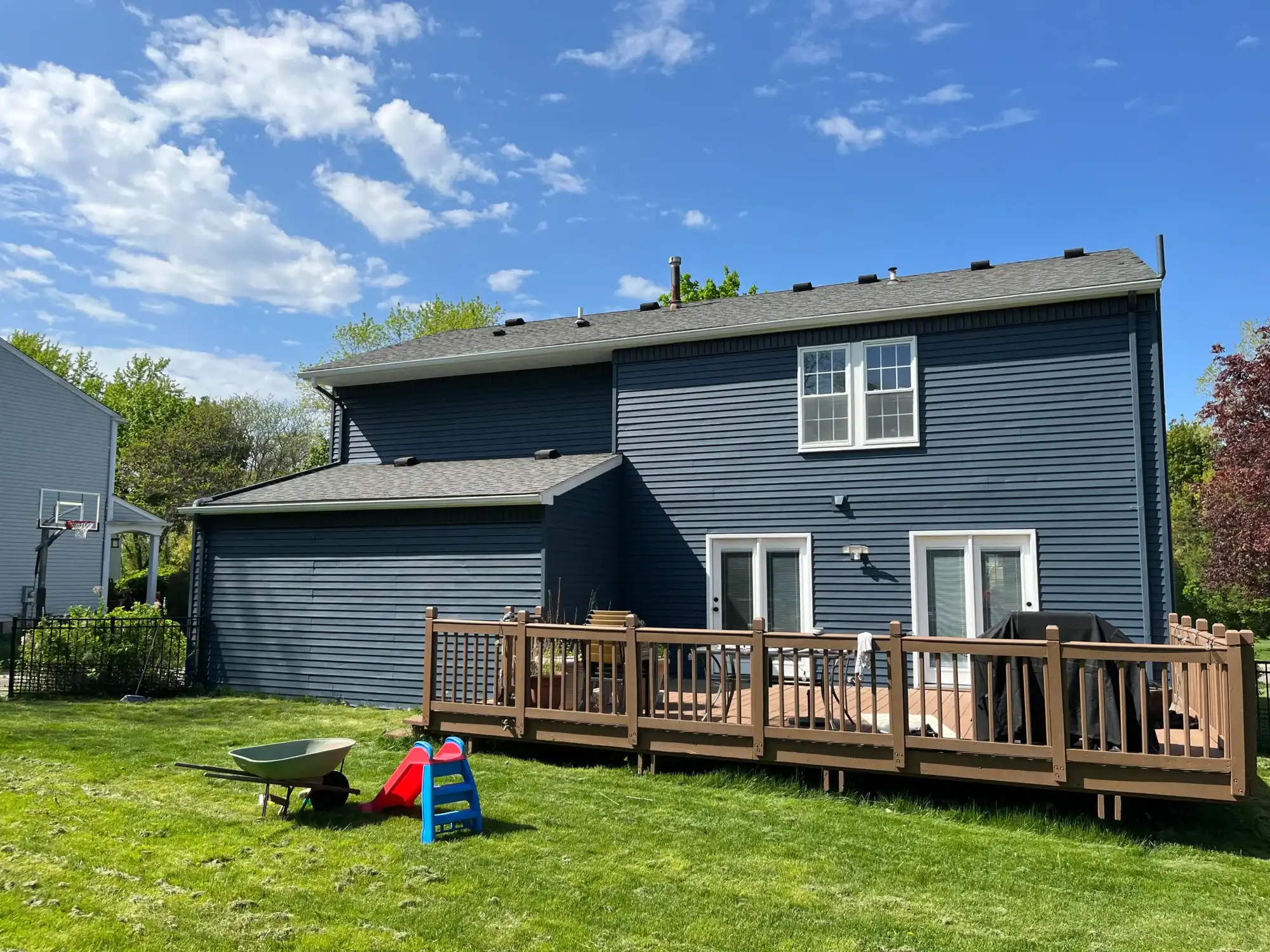
Not every paint job ages the same way. The paint you choose and the prep behind it decide how long the finish holds. Skipped prep and thin coats are the usual reason a job fails early. Careful surface work paired with quality product is the reason another job still looks sharp years later.
We use professional-grade coatings from Sherwin-Williams and Benjamin Moore on every exterior project, because the finish is only as good as what goes on the wall. Prep counts just as much. On our professional exterior painting projects, we wash the surface, scrape and sand failing paint, repair or replace rotted wood, and prime all six sides of every new wood panel. Priming all six sides is a step many crews skip, and it is one of the biggest reasons a finish holds up through Michigan winters and summers.
Should You Repaint Before Selling Your Home?
If a sale is on your mind, fresh exterior paint is one of the higher-impact moves you can make. Buyers size up a home in the first few seconds from the street, and worn paint reads as skipped upkeep. In its Remodeling Impact Report on outdoor features, the National Association of Realtors found that 92% of agents suggest sellers improve curb appeal before listing. A clean, well-kept exterior tells buyers the rest of the home was cared for, too. Not selling anytime soon? A fresh coat still earns its place by shielding the siding underneath from water and sun.
Should You Paint It Yourself or Hire a Pro?
A small, low, one-story section on a free weekend can be a reasonable do-it-yourself project. A full exterior is a different animal. Ladders, tall gable walls, rotted wood, and short weather windows are where a professional crew pays off. DIY exterior paint often ages faster because prep gets rushed and coats go on thin. A pro brings the right products, the safety setup for working at height, and a finish built to hold through the seasons. It also spares you weeks of washing, scraping, taping, and cleanup.